


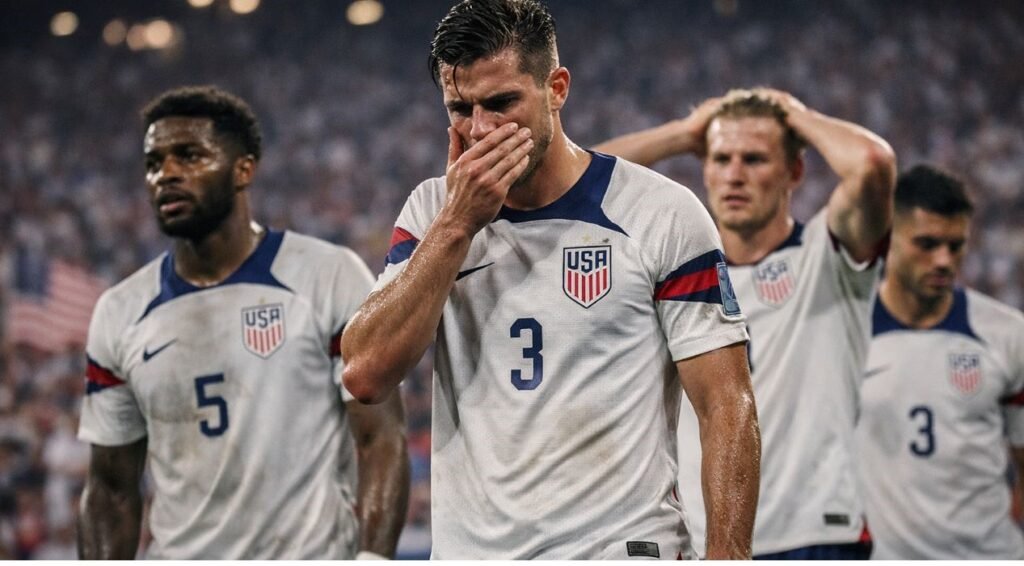
Introduction: Why Confidence Around 2026 Is Suddenly Shaking
With the FIFA World Cup 2026 set to be hosted across the United States, Canada, and Mexico, excitement should be peaking. Instead, unease is quietly growing—especially around the U.S. men’s national team.
Recent World Cup 2026 qualifiers, tactical instability, and defensive breakdowns have triggered uncomfortable conversations. Fans scanning the FIFA World Cup 2026 qualifiers table see progress, but performances tell a more fragile story. Add political noise, scheduling uncertainty, and global debates about a potential Boycott World Cup 2026, and optimism feels less guaranteed than it did a year ago.
The good news? This crisis isn’t fatal. In fact, the solution is already visible—if decision-makers act fast.
Why Defense Is the Real Threat to FIFA World Cup 2026 Success
World Cups are not won by hype. They’re won by teams that survive pressure.
Across recent tournaments, teams that reached the semifinals all shared one thing: defensive clarity. Right now, the U.S. lacks that clarity. Despite talent across Europe and MLS, the team still struggles with:
- Poor defensive transitions
- Inconsistent center-back pairings
- Set-piece vulnerability
In a tournament where one mistake can end a campaign, this is alarming.
The Numbers Behind the Concern
Goals Conceded vs. Top Opposition
Against high-ranking opponents in recent World Cup qualifiers, the U.S. has allowed goals late in matches—often after losing shape.
This is not just a player issue. It’s structural.
Set Pieces: A Repeating Problem
Set pieces remain one of the most reliable ways to score in international tournaments. Unfortunately, they’re also where the U.S. has struggled most.


Embed a stat graphic comparing set-piece goals conceded vs. top 10 FIFA nations
Root Causes of the Defensive Crisis
1. No Fixed Defensive Spine
Constant rotation prevents chemistry. World Cup teams need familiarity, not experimentation.
2. Fullbacks Caught Between Roles
Modern systems demand attacking fullbacks—but at the FIFA World Cup 2026 level, positional discipline matters more than flair.
3. Midfield Protection Gaps
When defensive midfielders push too high, center-backs are exposed. Elite opponents exploit this instantly.
The Bigger Context: Politics, Pressure, and Uncertainty
Beyond tactics, external factors are adding pressure.
- Online debates about a Boycott World Cup 2026
- Speculation asking, “Will World Cup 2026 be cancelled?”
- Renewed headlines claiming Trump threatens to move World Cup
While FIFA has dismissed relocation fears, these narratives affect public confidence and global perception—especially as the FIFA World Cup 2026 schedule approaches release milestones.
However, the Solution Lies in a Targeted Defensive Reset
Here’s the pivot: the situation looks worse than it is.
The U.S. doesn’t need a rebuild—it needs discipline, data, and decisiveness.
Explore more: FIFA Official Tournament Hub
The 5-Step Fix That Can Still Save FIFA World Cup 2026
Step 1: Lock a Defensive Core Now
Pick two center-backs and stick with them through every international window. Chemistry beats rotation.
Step 2: Redefine Fullback Instructions
Against elite teams in World Cup 2026 groups, fullbacks must prioritize compactness over overlapping runs.
Step 3: Assign a True Defensive Midfielder
Every successful tournament team has a ball-winner whose job is simple: protect the back line.
Step 4: Use Data, Not Reputation
Selection should rely on recovery speed, duel success, and positional discipline—not club status.
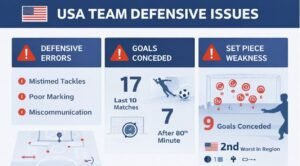
An infographic comparing defensive metrics across likely USA defenders
Step 5: Simulate Tournament Pressure Early
Friendlies should mirror knockout conditions—tight spaces, low possession, and late-game scenarios.
Visit CONCACAF Qualifiers Info
What This Means for the FIFA World Cup 2026 Outlook
If these fixes are implemented before final squad decisions, the narrative changes completely.
Instead of worrying about defensive collapse, the U.S. enters the tournament as a structured, resilient host nation—capable of surviving tough World Cup 2026 groups and making a legitimate run.
What Success Would Look Like in 2026
- Fewer goals conceded
- Calm late-game management
- Confidence regardless of opponent
That’s how home tournaments become historic.
FAQs
How are the World Cup 2026 qualifiers affecting team preparation?
The World Cup 2026 qualifiers are exposing tactical weaknesses, especially in defense, giving coaches valuable data before final squad decisions.
What does the FIFA World Cup 2026 qualifiers table reveal so far?
The FIFA World Cup 2026 qualifiers table shows progress for top teams, but underlying performances suggest some squads are overachieving results-wise.
How will World Cup 2026 groups impact host nations?
The World Cup 2026 groups will likely include multiple strong opponents due to expanded participation, making defensive stability essential.
When will the FIFA World Cup 2026 schedule be finalized?
The FIFA World Cup 2026 schedule is expected to be confirmed after final qualifiers, with host cities receiving match allocations first.
Is there real momentum behind a Boycott World Cup 2026?
While some activist groups discuss a Boycott World Cup 2026, there is currently no official movement threatening the tournament.
Will World Cup 2026 be cancelled due to politics or logistics?
No. Despite online speculation asking “Will World Cup 2026 be cancelled?”, FIFA has repeatedly confirmed full commitment.
Did Trump threaten to move the World Cup?
Headlines claiming Trump threatens to move World Cup stem from political rhetoric, not official FIFA policy or legal authority.
Conclusion: From Fragile to Fearless
The defensive crisis threatening the FIFA World Cup 2026 is real—but it’s also solvable. With focused leadership, smarter selection, and tactical discipline, the host nation can flip the narrative.
If the fixes happen now, 2026 won’t be remembered for controversy or missed potential—but for transformation.